Life on Earth Workshops
2026 Life on Earth Workshops: Series 1
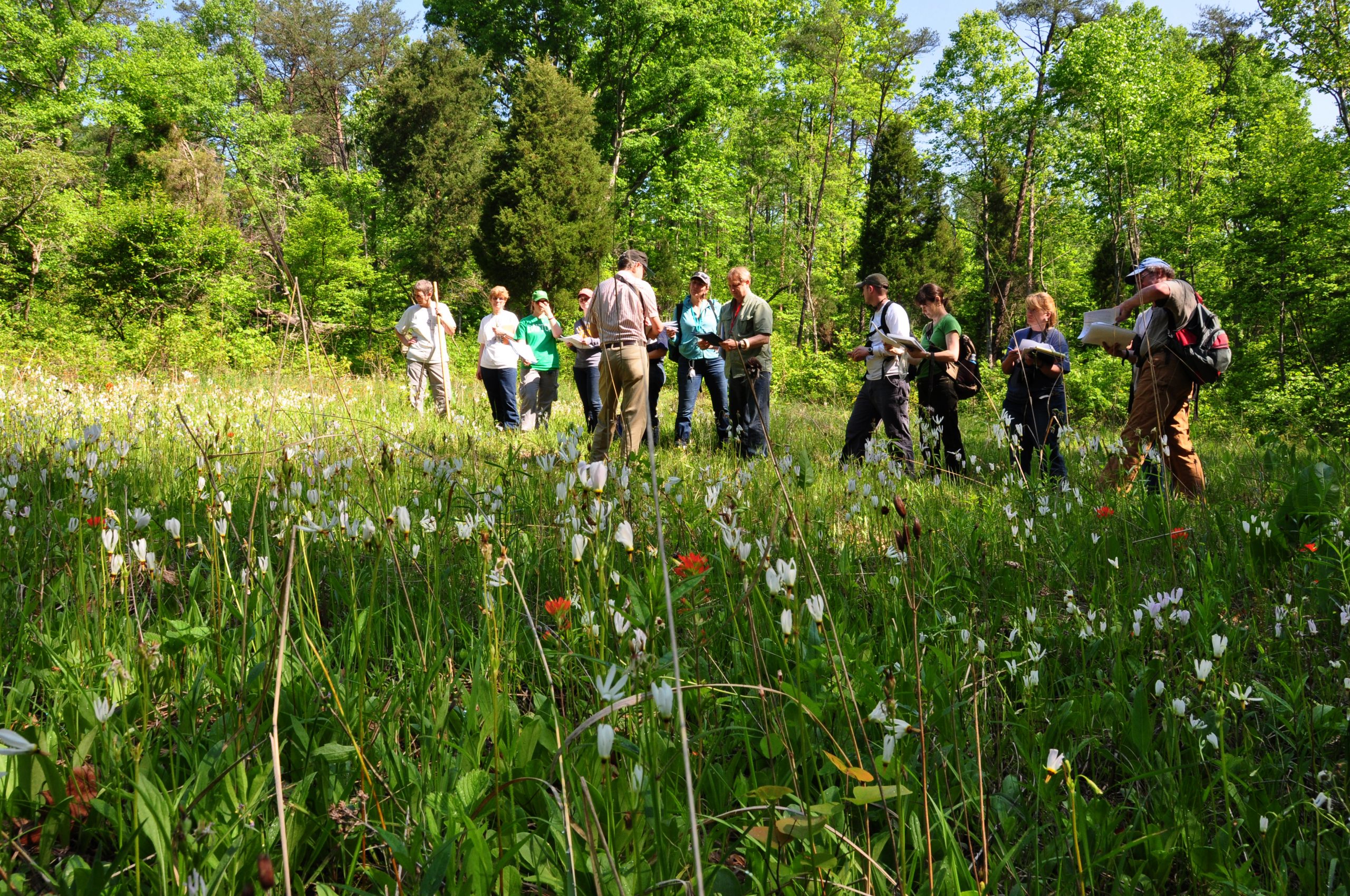
This is a new workshop series that explores life on Earth at The Edge of Appalachia Preserve System. The theme of this series is exploring how things in nature work, specifically life found in the eastern forest. With advances in technology, putting a name on a species with a device has become more readily available, but truly understanding how that organism, or group of organisms works, is often the more difficult information to obtain. This workshop series utilizes experts in their fields to take participants beyond simple identification and into a deeper look at the sensory systems, ecology and adaptations that allow life in the eastern forest to flourish and continue to support human existence.
The workshops are open to everyone at all skill levels, although naturalists, teachers, science educators, natural area managers and others in the natural sciences will find these workshops especially beneficial.
Please note: Workshops are both indoors and in the field. Participants should be able to handle moderate hiking conditions as the preserve is situated in rugged, unglaciated southern Ohio and be prepared to tolerate the elements, such as insects, heat and rain.
The Silurian Period
Saturday, May 30, 2026 from 9:30 a.m. to 4:30 p.m.
Instructor: Carlton Brett, Ph.D., Professor, University of Cincinnati
Understanding the geologic resources and deep time history in Ohio is critical to knowing the natural world on the surface. The Silurian Period (~442.5 to 419 million years before present; or Ma) represents one of the most fascinating of Ohio’s six geologic time periods. Geologists put its origins at the time of warming and rising seas, following rapid climate changes culminating in great continental glaciers at the end of the Ordovician Period (~443-442.5 Ma). These changes were associated with the second largest mass extinction event in life’s history. The Silurian represents a time of recovery and diversification in its mostly shallow seas warmed by the subtropical sun, as Ohio was south of the equator during this period. The seas were rich in colonial corals and stromatoporoid sponges, groves of crinoids or sea lilies and vast numbers of shelly brachiopods, bryozoans, snails, clams, predatory nautiloid cephalopods, trilobites, giant sea scorpions and others. Remains of all these groups of sea animals can be found abundantly in the Silurian of Adams County. One of the period’s most important developments was the advent of the vascular land plants that joined the already established non-vascular mosses and liverworts. The real beauty, mystery and knowledge of this wonderful time in Ohio’s past can be found in the heart and mind of one of Ohio’s most respected and passionate geologists and Silurian authorities, Dr. Carlton Brett. Don’t miss the rare opportunity to study with this gifted teacher to take you deep into a fascinating world of Ohio’s past so you can have a richer appreciation for the landscapes you enjoy today. Carpooling to roadside rock outcrops will be required.
Location: Eulett Center, 4274 Waggoner Riffle Road, West Union, Ohio 45693
Please note: Lunch is provided. 15 maximum attendees.
Pollination Ecology
Saturday, June 20, 2026 from 9:30 a.m. to 4:30 p.m.
Instructor: Mike Arduser, Retired Biologist, Missouri Department of Conservation
The pollination of plants by insects is one of life on Earth’s fundamental, bedrock processes. This fascinating relationship between insect and flower serves both the natural world systems as well as humanity’s, with 75% of our crops partially dependent on insect pollination. In the natural world, pollinators are responsible for the reproduction of 85% of the world’s flowering plants, yet the documented decline of pollinators that serve them rarely makes the news. This should concern us all enough to be more educated. This workshop will be a journey into the fascinating science of pollination ecology that will surely boggle the minds of the uninitiated with bewildering pollen delivery systems, specialized bee/plant alliances (oligolectic) and a host of structures, strategies and seasonal timings that make this topic irresistible to anyone interested in nature. Mike Arduser is a respected bee authority versed in native bee identification and he publishes on pollination ecology. Participants will leave with a newfound respect and greater knowledge about the intimate association between pollinators and the plants they serve in one of the greatest, most overlooked shows on Earth.
Location: Eulett Center, 4274 Waggoner Riffle Road, West Union, Ohio 45693
Please note: Lunch is provided. 15 maximum attendees.
Mycorrhizal Fungi
Saturday, August 1, 2026 from 9:30 a.m. to 4:30 p.m.
Instructor: Claudia Bashian-Victoroff, Research Specialist, Holden Forest and Gardens
The green leafy world as we know it would not exist were it not for underground mycorrhizal fungi growing into (endo) and around (ecto) plant roots. These fungi form vast networks underground that are essential to the health of the world’s ecosystems. They play important roles in increasing nutrient and water uptake, strengthening plants responses to environmental stressors and influence nearly every aspect of soil function and plant health. In fact, 90% of all plants live in association with mycorrhizal fungi and depend on them for their survival. Only somewhat recently have scientists begun to develop a fuller understanding of these fungi and their complex relationships with the universe of plants. While many naturalists tell the story of the orchid family’s dependence on these fungi, this workshop will expand the discussion to why most all plants are involved. It is a mysterious mutualistic system with countless yet to be described species of fungi and so much more to be learned about how it all works. Come to this workshop to learn what is known about this amazing system and how it defines the eastern woods as we know it. Claudia Bashian-Victoroff is a fungal ecologist studying the connections between soil fungi and tree health and the perfect ambassador to lead us into this strange unseen world.
Location: Eulett Center, 4274 Waggoner Riffle Road, West Union, Ohio 45693
Please note: Lunch is provided. 15 maximum attendees.
Ant Sensory Systems
Saturday, August 29, 2026 from 9:30 a.m. to 4:30 p.m.
Instructor: Rachelle Adams, Ph.D., Associate Professor, Ohio State University and select members of her Adams Megalomyrmex Ant Lab (https://megalomyrmex.osu.edu/).
Ants are arguably one of the most fascinating of all organisms. Their eusocial systems are highly organized and dependent on chemical signals critical to the operation of the colony. These compounds are created from a multitude of different glands on ants’ bodies and vary by species. From trail pheromones that organize foraging highways to cuticular hydrocarbons that define colony identity, nearly every ant behavior is orchestrated by chemical signals. Participants will explore how these compounds regulate cooperation, warfare and symbioses, while gaining hands-on experience. Attend this workshop to learn the inner details of how ants work so you can broaden your knowledge of and appreciation for, this fascinating group of organisms. Join Dr. Adams, forthcoming author of the ODNR Guide to Ants, for this immersive Ant Chemical Ecology Workshop!
Location: Eulett Center, 4274 Waggoner Riffle Road, West Union, Ohio 45693
Please note: Lunch is provided. 15 maximum attendees.
Spider Senses
Saturday, October 17, 2026 from 9:30 a.m. to 4:30 p.m.
Instructor: Nate Morehouse, Ph.D., Associate Professor, University of Cincinnati & Director, Institute for Research in Sensing
Spiders are one of the most captivating, yet misunderstood, groups of organisms on Earth. Their diversity is staggering with some 4000 species in North America alone occurring in nearly every habitat imaginable. But what physiological features do they possess to make them such a success in the evolutionary arms race? Dr. Morehouse and his lab are doing groundbreaking work on jumping spider species to unravel some of these mysteries. Their work on jumping spider color vision, mating displays and visual systems is revolutionizing our understanding of how these creatures work and how it all may have played out evolutionarily. Other spider groups have adaptations beyond vision like high precision sensory hairs to detect vibration, air currents and even chemosensation. They also have a bewildering array of silk types and web designs developed from spiders’ own physical adaptations to their unique environments and prey choice. Dr. Morehouse and his lab are dedicated to increasing science literacy in this region and their work studying spider senses is undoubtedly some of the best and most fascinating research in this region. Change your arachnophobia into arachnophilia with this compelling workshop!
Location: Eulett Center, 4274 Waggoner Riffle Road, West Union, Ohio 45693
Please note: Lunch is provided. 15 maximum attendees.
Registration
Cost: $80 per workshop. Workshops include a veggie or meat lunch and instruction.
Participants will be able to register and pay online via the link above.
To pay by phone with a credit card, or to register for a workshop to hold your space and mail a check later please call: (513) 287-7000.
Please do not mail payments to the preserve's office.
Questions?
Please contact Preserve Director, Chris Bedel with any questions about the workshops at cbedel@cincymuseum.org.
Cancellation Policy
Workshop fee (minus $25 handling charge) refundable up to 3 weeks prior to date of workshop. No refunds within 3 weeks prior to the workshop.