
FOR IMMEDIATE RELEASE: March 5, 2026
Cincinnati Museum Center to display its national treasures
Declaration of Independence, Revolutionary War flag and expansive 19th-century photo collection commemorate nation's 250th anniversary
CINCINNATI - As the United States prepares to celebrate its 250th anniversary, Cincinnati Museum Center (CMC) is showcasing national treasures from its own collections that place Cincinnati at the center of America’s founding story. Two exhibitions opening July 3 will contribute to the America 250-Ohio commemoration, connecting national milestones to the pivotal role the Ohio Valley has played in shaping the nation.
From Revolution to the frontier
The centerpiece of Declarative Acts and Revolutionary Actors is a document that united a nation. A rare broadside printing of the Declaration of Independence from New York printer John Holt will go on display just days before its own 250th anniversary. In addition to the now-famous text of the Declaration itself, Holt’s printing included a resolution from the New York state legislature affirming their support for independence. The document dated July 9, 1776, is one of just five to have endured the past two-and-a-half centuries and is a powerful example of how revolutionary ideals were affirmed and distributed in real time. 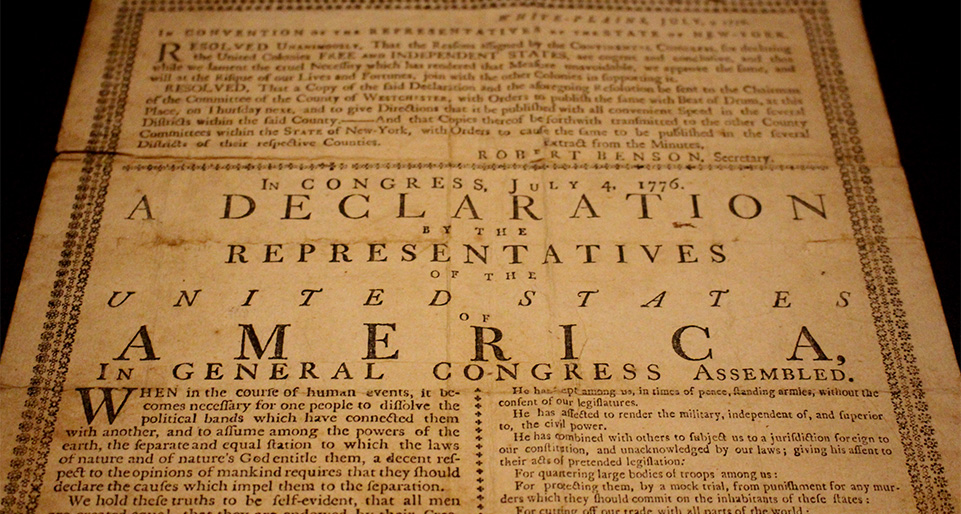
“Cincinnati Museum Center has an incredible collection of treasures that represent defining, foundational moments in our national history,” said Elizabeth Pierce, president & CEO of Cincinnati Museum Center. “Precious artifacts like the Holt Broadside printing of the Declaration of Independence define our role as caretakers and storytellers and remind us the role Cincinnati and the Ohio Valley have played in our nation’s 250-year history.”
Alongside the Declaration, CMC will display the blue silk banner of the 1st Pennsylvania Battalion – one of just 30 surviving Revolutionary War flags. At its center are the words “United We Stand” above a bundle of 13 arrows bound together by a ribbon. In the flag’s canton, 13 red and white stripes, repurposed from the flag’s original British Union Jack, offer physical evidence of a people transforming from British subjects into citizens of a new republic.
Fort Washington and the opening of Ohio
Artifacts from Fort Washington connect Cincinnati directly to the establishment of federal authority in the new nation’s Northwest Territory. The fort’s plans drawn by Major John Doughty will be displayed alongside salvaged timbers and chains from the 18th-century fort. The earliest known depiction of the frontier outpost, drawn by Captain Jonathan Heart, and the U.S. Legion’s 1794 Northwest Territory Order Book catalog the resources and movements at Fort Washington and the reality of life at the western edge of the American republic.
Fort Washington and Cincinnati – formerly named Losantiville – emerged from national ambitions to expand westward. Military campaigns launched from the fort influenced land ownership, settlement patterns and demographic change through the Ohio Valley and beyond.
But the fort was not merely a military outpost. Positioned along the vital transportation corridor of the Ohio River, the fort marked the beginning of civic, economic and political life in the region. As Revolutionary War veterans settled in the southwestern corner of the Ohio territory, spurred on by land grants received for their war service, the fort helped enable goods and ideas to flow westward. Cincinnati became strategically essential and, in many ways, stood at the intersection of national ambition, frontier conflict and the formation of a community.
Declarative Acts and Revolutionary Actors opens July 3, 2026.
History through a new lens
While one exhibition explores the nation’s founding and westward expansion, another presents 19th-century America through the groundbreaking work of two of the era’s most accomplished photographers.
“Equal to Any in the City:” Ball & Thomas Photographs 1840s – 1870s showcases more than 100 original photographs from the museum’s renowned J.P. Ball collection – the largest collection of Ball’s work in the United States, comprised of more than 400 daguerreotypes, ambrotypes, tintypes, cartes de visite and more. 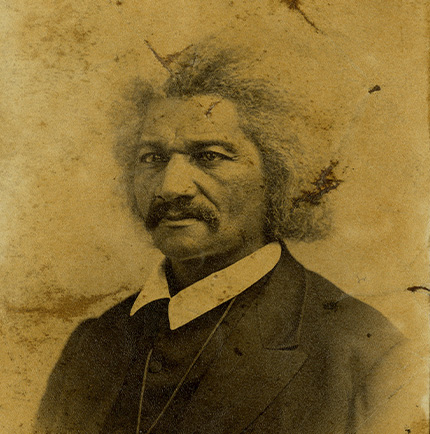
In Cincinnati, James Presley Ball, a free man of color, built one of the most successful photography studios in the country. His work transcended racial barriers in a period of profound inequality. Ball photographed some of the most prominent people of the era, including Frederick Douglass, but equally important are his portraits of everyday African American families – powerful visual documentation that preserved identity, dignity and agency for people often underrepresented in 19th-century historical records.
The exhibition also introduces Ball’s talented team, including Alexander S. Thomas – Ball’s brother-in-law and a talented photographer in his own right – and acclaimed painter Robert S. Duncanson who worked to colorize some of Ball’s photographs and paint studio backgrounds.
“Equal to Any in the City” tells a story of entrepreneurship, artistry and scientific innovation during photograph’s earliest decades. It also explores how Ball and Thomas used their platform to advocate for abolition, demonstrating how art and technology intersected with social change.
“Equal to Any in the City:” Ball & Thomas Photographs 1840s – 1870s opens July 3, 2026. The exhibition is part of the 2026 FotoFocus Biennial.
Preserving Cincinnati’s national story
The treasures within CMC’s collections extend far beyond its gallery space. Through blogs, podcasts, videos and curriculum guides developed for America 250-Ohio, the museum is expanding access to these materials and elevating Cincinnati’s role in the national narrative.
Preservation is at the heart of that effort. By maintaining and caring for these artifacts – from a rare Declaration of Independence broadside to a silk banner of liberty and fragile 19th-century photographs – CMC ensures local stories remain integral to the broader American story. The objects allow future generations to study original materials, ask new questions and engage in meaningful dialogue about how Cincinnati and the Ohio Valley helped shape the nation.
CMC’s participation in the nation’s semisesquicentennial extends beyond its exhibitions. Elizabeth Pierce, president & CEO of Cincinnati Museum Center, serves as a member of the America 250-Ohio Commission, appointed by Governor Mike DeWine, helping guide the state’s official commemoration of the nation’s 250th anniversary. Pierce also serves on the America 250-Ohio Hamilton County Commission, supporting local planning and collaboration to ensure the region’s stories and contributions are part of the statewide and national observance.
To explore CMC’s America 250-Ohio resources and learn more about upcoming exhibitions, visit cincymuseum.org/America-250.
# # #
About Cincinnati Museum Center
Cincinnati Museum Center (CMC) at Union Terminal is a nationally recognized, award-winning institution housed in a National Historic Landmark. CMC is a vital community resource that sparks curiosity, inspiration, epiphany and dialogue. CMC was awarded the 2009 National Medal for Museum and Library Service from the Institute of Museum and Library Services and received accreditation from the American Alliance of Museums in 2012, one of a select few museums in the nation to receive both honors. Organizations within CMC include the Cincinnati History Museum, Museum of Natural History & Science, The Children’s Museum, Robert D. Lindner Family OMNIMAX® Theater, Cincinnati History Library and Archives and the Geier Collections and Research Center. Housed in historic Union Terminal – a National Historic Landmark restored in 2018 and recognized as the nation’s 45th most important building by the American Institute of Architects – CMC welcomes more than 1.8 million visits annually, making it one of the most visited museums in the country. For more information, visit cincymuseum.org.