
A lichen conservation story: Can you transplant a lichen from a dead tree to a living one?
By: Mark Zloba, Ecological Manager, Richard & Lucile Durrell Edge of Appalachia Preserve System

Phaeophyscia leana, Lea’s bog lichen. Photo by Mark Zloba.
For the past 20 years, lichen enthusiasts have been searching for new locations of a very rare lichen. So rare is this lichen that until 1978 it was believed to be extinct. Lea’s bog lichen, Phaeophyscia leana, is a unique lichen that was discovered and described in the 1830’s near Cincinnati in a “bog” by Thomas Lea. Considered unique as it is one of the only macro-lichen (non-crustose, or not micro) that grows on trees in a floodplain where water rises and remains at flood level for days if not weeks at a time. Other lichens do not seem to survive submerged in water this long. Lea’s bog lichen not only survives here but may prefer this habitat.

Flood waters of Ohio Brush Creek creates the perfect habitat for this lichen. Photo by Mark Zloba.
After rediscovery in 1978 in Illinois, word spread to others to search for this lichen in its riparian habitat. Over 30 years, more and more sites along the Ohio river were found supporting Lea’s bog lichen. In the early 2000’s, local naturalist Barb Lund of Adams County, Ohio, found this lichen growing on private land along the Ohio River. This site was not far from Cincinnati Museum Centers Edge of Appalachia Preserve System (EOA). Barb showed me this lichen, and with the search image now fresh in my brain, I went out on EOA property to see if we also supported this rare species. It did not take long before I found two locations in the floodplains of Ohio Brush Creek supporting many of these lichens on numerous trees.
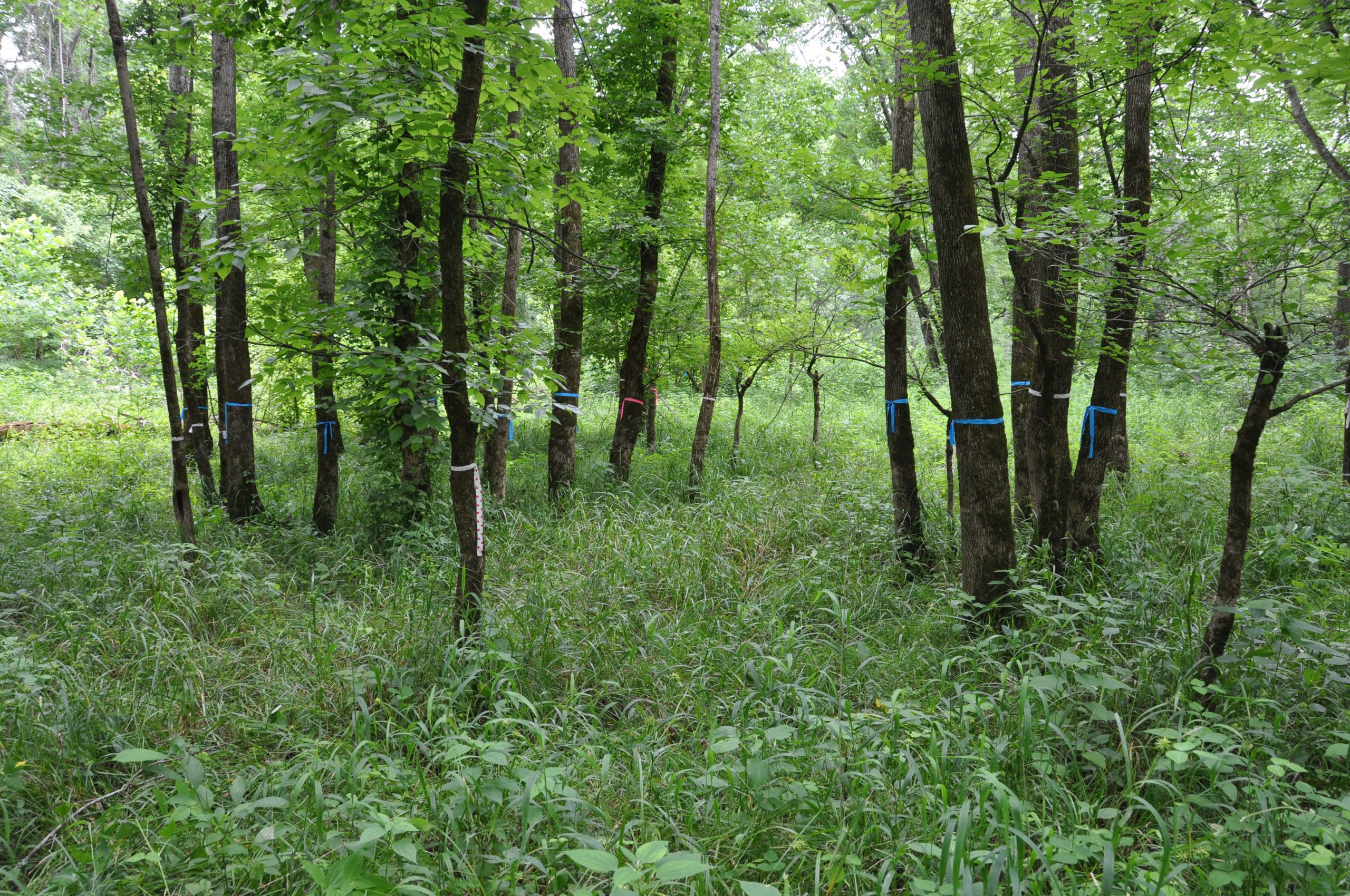
Floodplain site with identified trees with Lea’s bog lichen presence Photo by Mark Zloba.
What a great story, right? An extinct species believed lost, now found, and living in a handful of states, flourishing on many trees, some in protected areas like our nature preserve. But wait, not so fast. In 2014, I noticed that almost half of these trees that the lichen was growing on were green ash trees, Fraxinus pennsylvanica. At this time, the damage from Emerald ash borer beetles, Agrilus planipennis, was just showing up on our Adams County ash trees and starting to de-bark infected individuals. The lichen clings to the bark positioned perfectly for its survival. If the bark falls off, and the tree dies, the lichen will die with it.
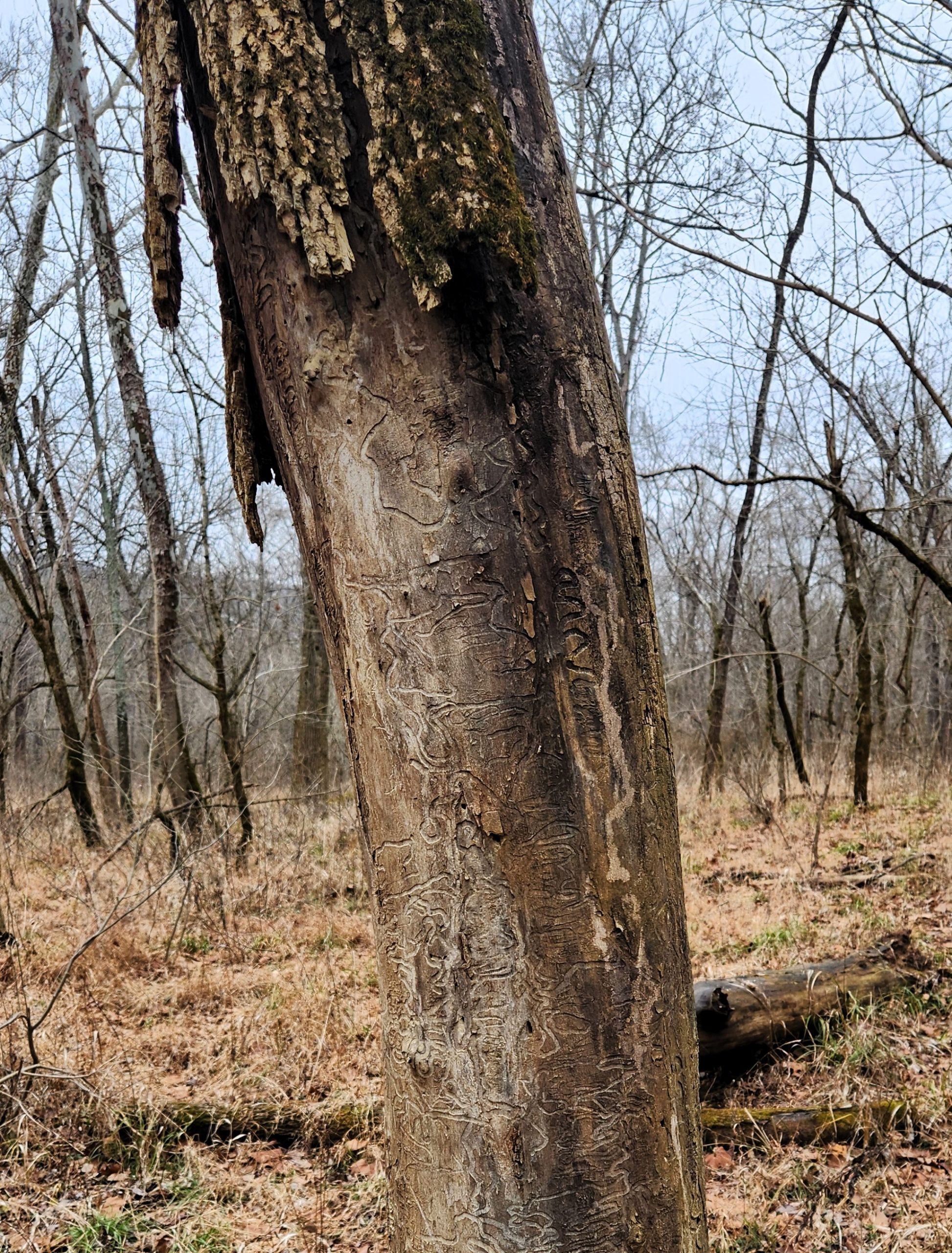
Bark falling off dead ash tree. Photo by Mark Zloba.
In 2016, with advice from two of the country’s top lichen conservationists, James Lendemer and Jessica Allen, we decided to cut off the ash trees lichens and transplant these chunks of old bark and lichen to new trees in the area to give this rare lichen a fighting chance. The goal, to hope the transplanted lichen pieces will grow off the old bark and onto a new tree substrate. Aided by student volunteers from University of Cincinnati, we removed 53 Lea’s bog lichen chunks from dying ash trees in the two sites. Using silicone, we glued the chunks onto 16 other nearby tree species that were suitable hosts of this lichen.
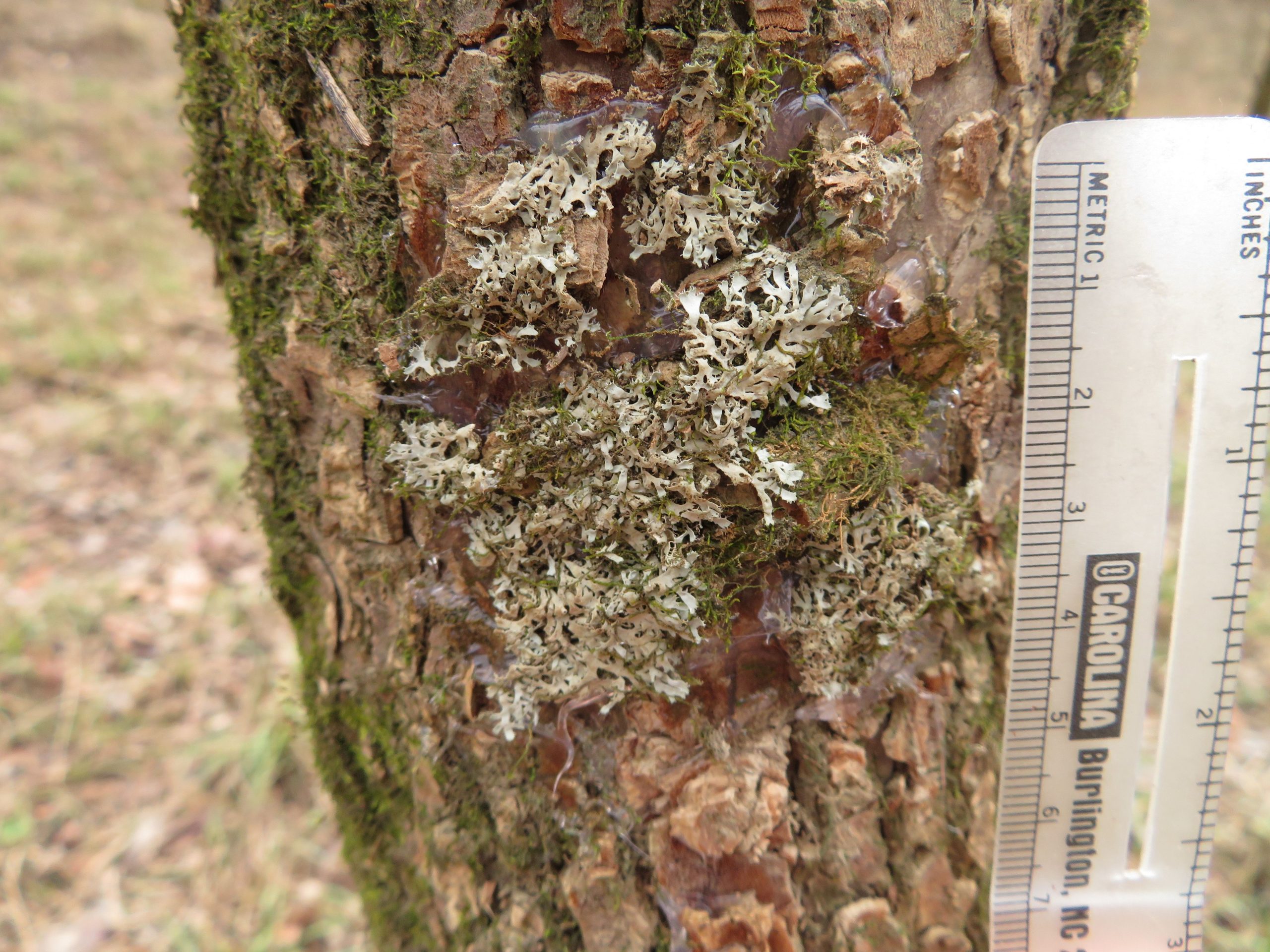
Lichen and old bark silicone to new tree substrate. Photo by Mark Zloba.
Over 10 years, I have periodically gone to the two sites to monitor the silicone chunks to see if the flood waters have removed them or not. And since it’s been 10 years, it’s a good time to report the results. 9 of the 53 transplants of Lea’s bog lichen have grown off the chunks of old ash bark and are now living on their new host substrate. Close to 17% of what was moved from dying trees survived floods, beavers and anything else in the environment that might remove it. So yes, you can transplant this lichen species to suitable substrates!

New growth on to new tree. Silicone still present from old piece. Photo by Mark Zloba.
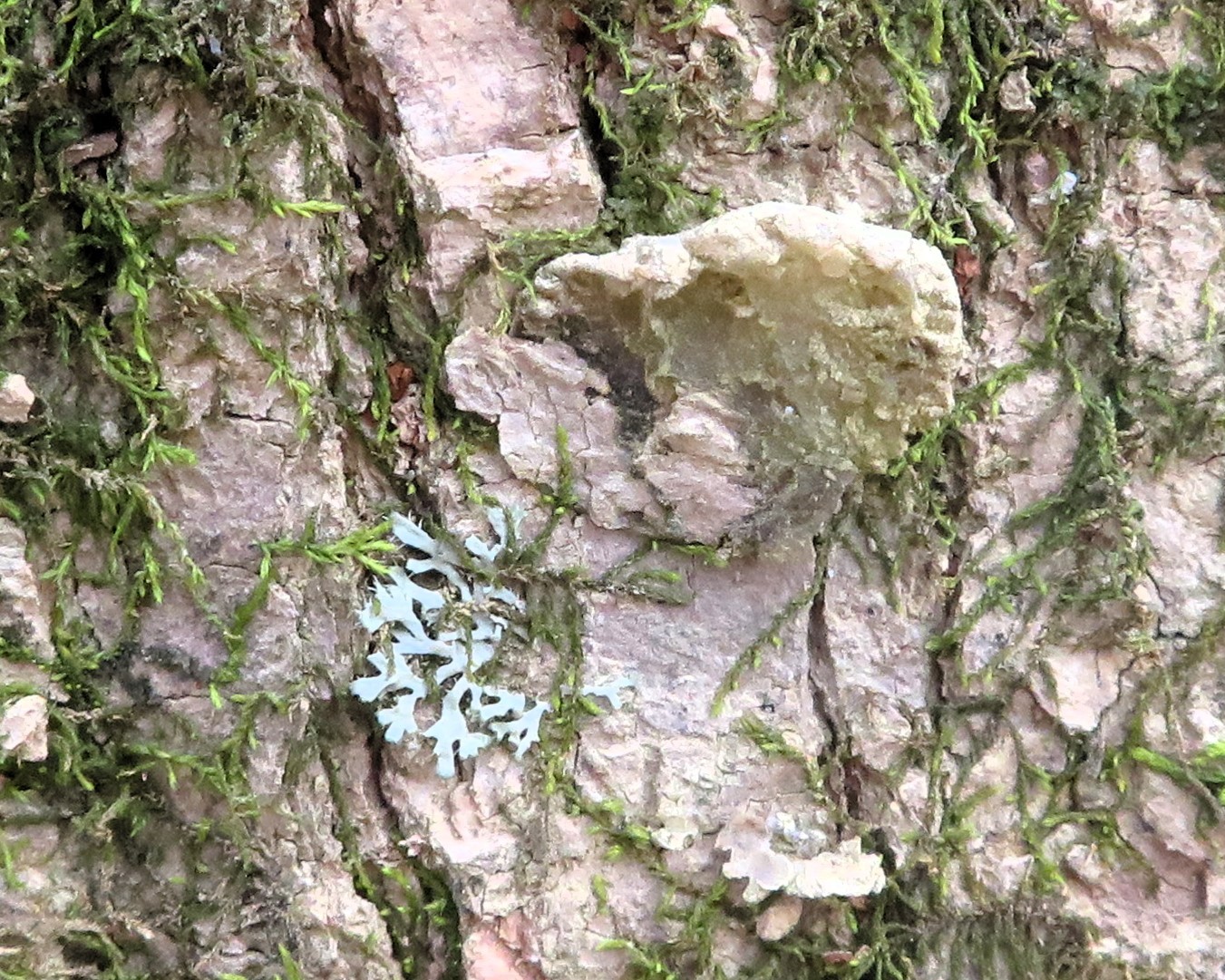
New growth on to new tree. Silicone still present from old piece. Photo by Mark Zloba.
The loss of ash trees in this habitat has caused a decline in half of this lichen population, but it still survives on other tree species. Some of the silicone lichen chunks persisted long enough through flooding to enable the lichen to grow outward and onto the new substrate. This success might prove helpful for future projects where other lichen species might be imperiled in other situations.
If you find yourself in a floodplain along the Ohio river, take a look at tree bark below flood stage and see if there is a lichen. Chances are it is Lea’s bog lichen and you can report it to local naturalists.