
America 250
Power of Place
Hopewell Ceremonial Earthworks
By: Tyler Swinney, Manager, NAGPRA and Tribal Liaison
What happened here? Place is a powerful concept. Our landscape and environment shape our worldview, and places can hold public memories that bond people to their identities and their past. For most cultures, a sense of place – including our relationships with the natural and spiritual world – shape community identity, social structure and history.
Native American Earthworks in Ohio are a visible and enduring reminder of the power of THIS place. When our country declared independence from Great Britain in 1776, these monumental gathering sites were already more than 1,000 years old. And they are globally significant: eight of these Native earthworks in Ohio were recently declared the 25th UNESCO World Heritage Site in the United States. Built between 2,000 and 1,600 years ago, these sites – the “Hopewell Ceremonial Earthworks” (Figure 1.) – are spectacular examples of Native American monumental architecture. UNESCO (the United Nations Educational, Scientific and Cultural Organization) considers these earthworks of “outstanding value to humanity.” UNESCO recognizes them alongside other places of global significance, such as the Acropolis of Athens, the Great Pyramids at Giza and Machu Picchu in Peru.
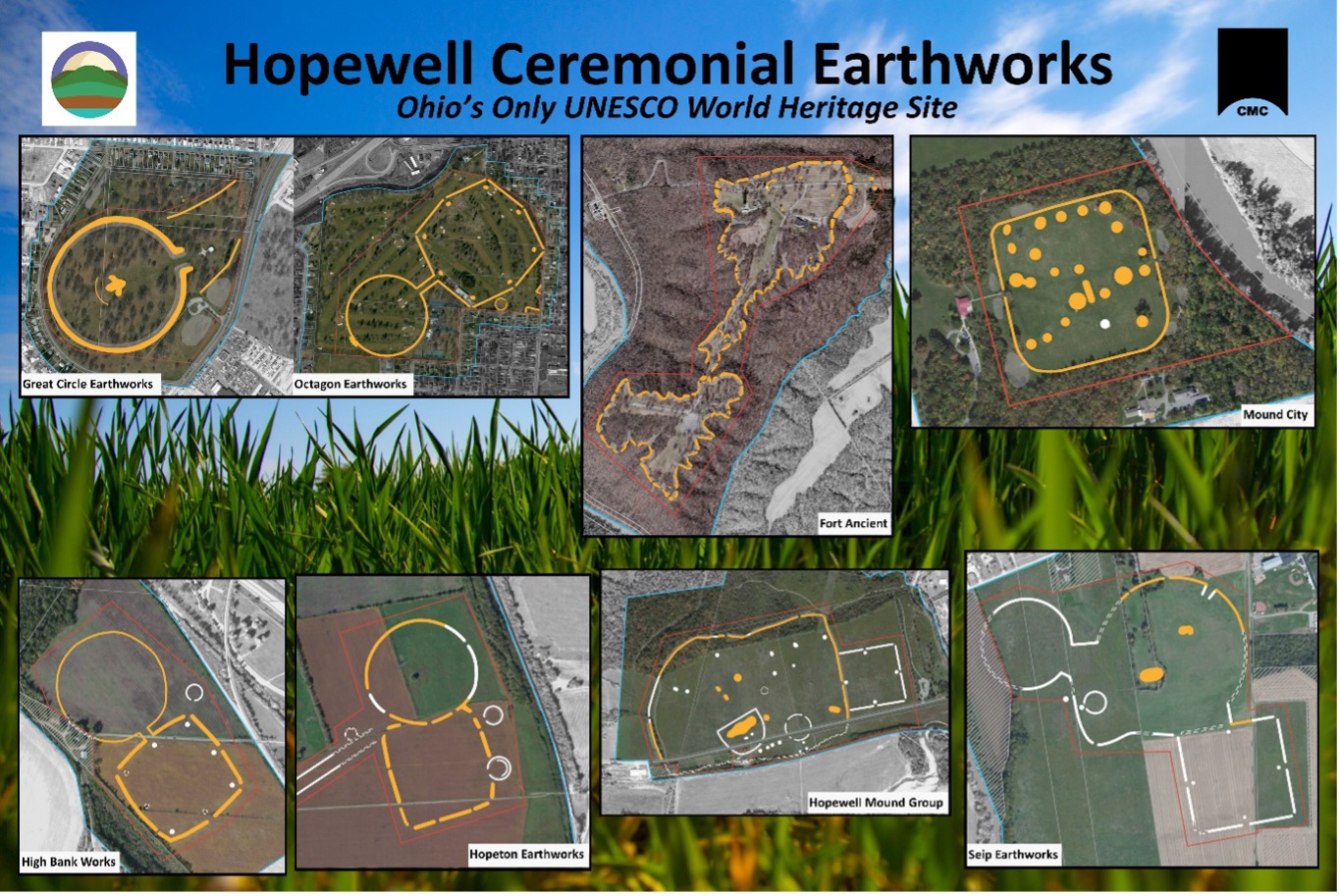
Figure 1. Hopewell Ceremonial Earthworks
The Hopewell Ceremonial Earthworks are complex masterpieces of landscape architecture. They express the power of place millennia after they were built. Communities of Native Americans built huge squares, circles and octagons that are geometrically precise and align with complex solar and lunar cycles. The communities who built them periodically gathered at these special places to worship, observe the heavens and stay connected to one another.
The earthworks are enormous to accommodate large numbers of people from diverse tribal communities. With walls up to 13 feet tall, an internal ditch between 8 and 13 feet deep and a diameter of about 1200 feet, The Great Circle of the Newark Earthwork Complex is so large that during the mid-1800s, it was used as the Ohio State Fairgrounds (Figure 2.). It is also less than a half degree off from being a perfect circle that encloses nearly 30 acres!

Figure 2. The Great Circle of the Newark Earthwork Complex as the Ohio State Fairgrounds in 1854. https://ohiomemory.org/digital/collection/p267401coll32/id/13197
Archaeologists have found items at these earthworks that are made from mica from Appalachia, seashells from the Gulf of Mexico, copper from the northern Great Lakes and obsidian from the Rocky Mountains. These materials show that Native people traveled to Ohio from across North America, bringing rare and precious gifts as part of their pilgrimage to these ceremonial places. People built these structures over multiple generations, and without the help of animals like donkeys or horses. This immense effort further cements these places as centers of human ingenuity. Appreciate how much sophisticated skill it took to organize scientific and construction labor over hundreds of years.
Once, thousands of mounds and many complex earthworks of various shapes and sizes dotted the Ohio landscape. Farming, mining, road work and urban development have destroyed most of these structures, but those that remain bear witness to Native American engineering, scientific observation and resilience. Although countless earthworks, like those originally situated in downtown Cincinnati (Figure 3.) and Newtown, Ohio (Figure 4.), have unfortunately been destroyed, those places still hold power and are part of the stories written on the land by those who were here before the United States.
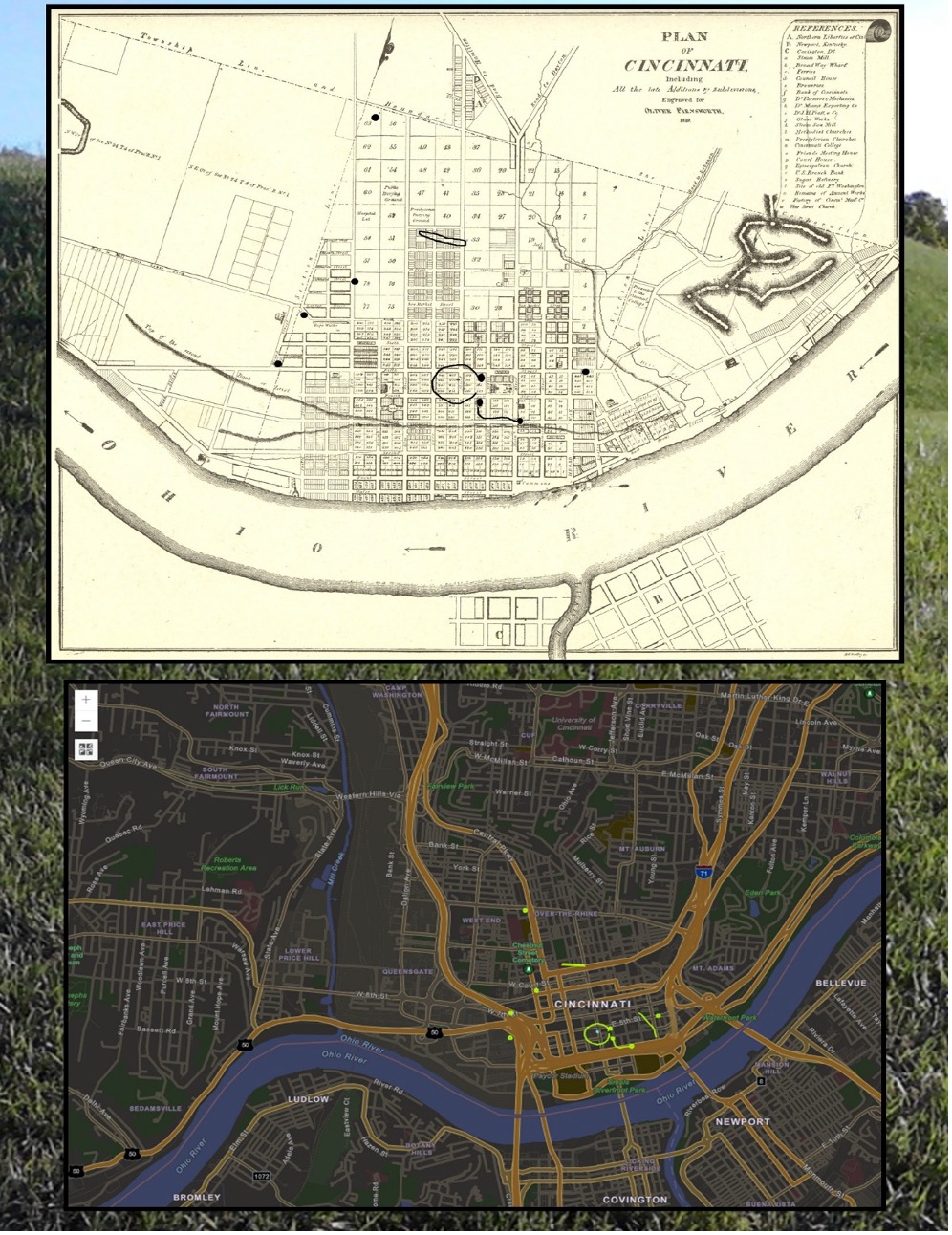
Figure 3. Cincinnati Works. Top: Daniel Drake Map (1815); Bottom: approximate location of Cincinnati Earthworks today.
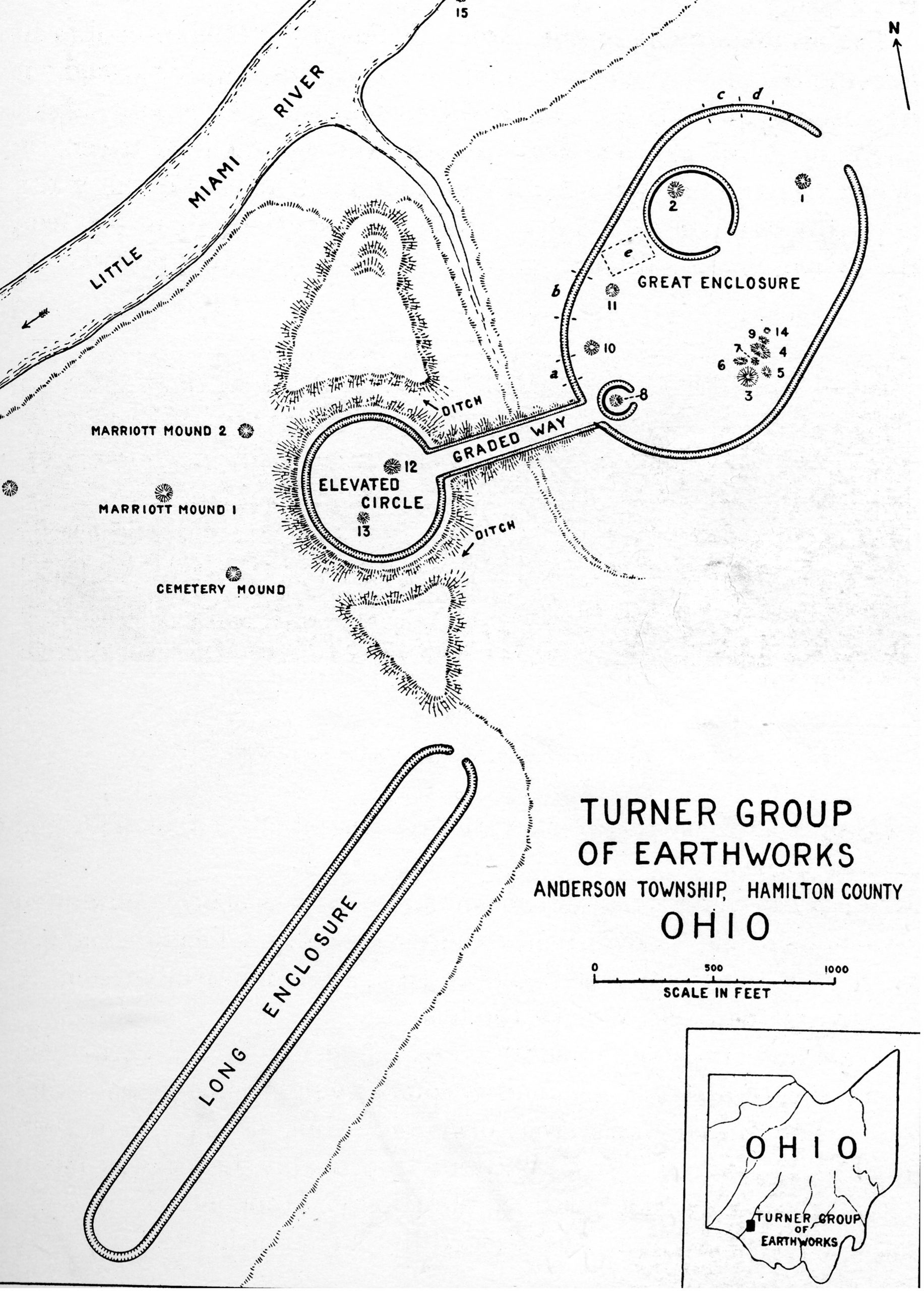
Figure 4. Turner Earthworks. (1922) Papers of the Peabody Museum of American Archaeology and Ethnology, Harvard University. Vol. VIII. — No. 3