
“No Discrimination Shall be Made on Account of Race, Color, and Creed:” – The Civilian Conservation Corps and Cincinnati’s Mt. Airy Forrest
By: Arabeth Balasko, Curator, Photographs, Prints, & Media
When the Great Depression destroyed the American economy in October 1929, many in the work force suddenly became jobless and were unable to care for themselves, their families, and their loved ones. When Franklin Delano Roosevelt [FDR] took office in early 1933, almost four years into the county’s financial crisis, he sought inventive and productive ways to help regenerate the country after years of domestic upheaval and instability.
One overarching program he quickly enacted was the New Deal, which attempted to repair the damage the Great Depression had caused, and was continuing to cause the nation. Early acts of the New Deal helped stabilize banks with the Emergency Banking Act of 1933; it helped to create agriculture relief programs such as the Agricultural Adjustment Act of 1933; and it generated an employable workforce with the founding of the Civilian Conservation Corps in 1933.
The Civilian Conservation Corps, also known by the acronym CCC, was a work-relief program designed to employ men [women were not included in the CCC’s labor pool] ages 18-25. These men would be sent to various locations across the United States to help conserve, build and rebuild damaged park infrastructures, and manage forested sites for outdoor enjoyment and recreation. It was the goal of FDR to repair existing, and establish new, outdoor destinations. He, along with the first female Secretary of Labor, Frances Perkins [the first woman to serve in the cabinet] set-up the program and began employing workers in the summer of 1933.
Illinois Congressional representative, Oscar DePriest, the only Black member of Congress during this time, wrote a clause in the Act stating, “That in employing citizens for the purpose of this Act, no discrimination shall be made on account of race, color, and creed.” Meaning, this program was designed to employ both white and Black men across the nation. However, due to racial tensions and segregation practices in various parts of the country during this time, the CCC was purposefully segregated by race in specific areas and locations.
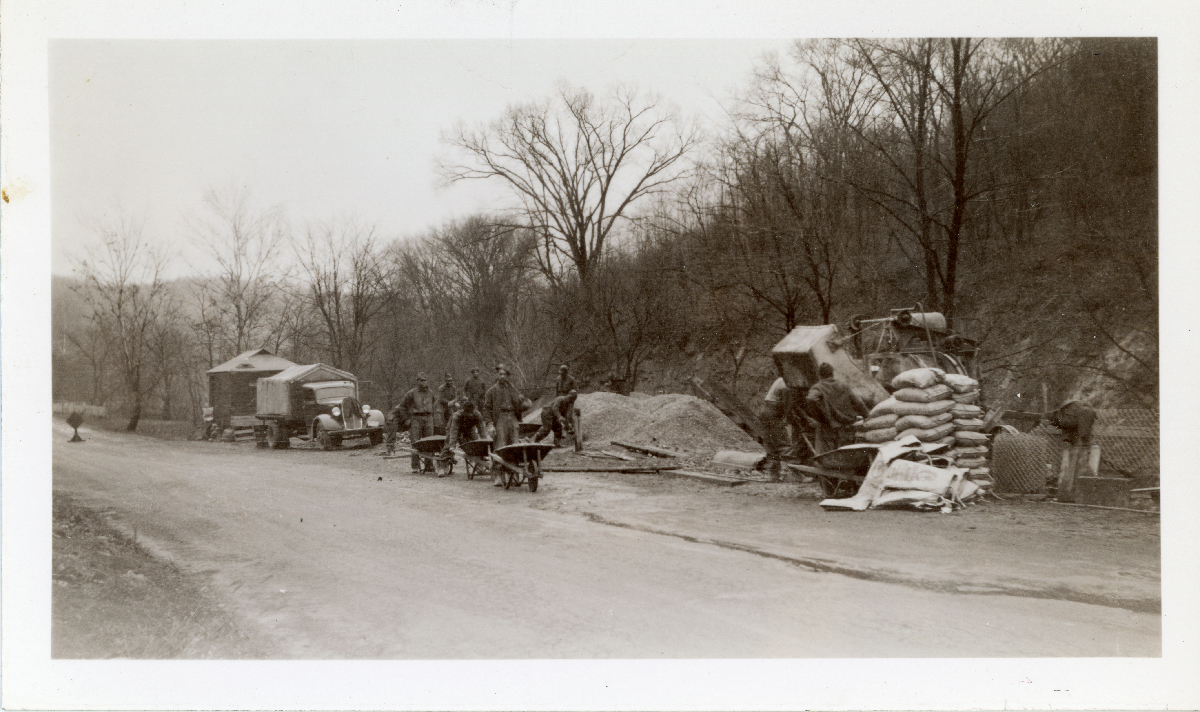
SC#141-109; CMC
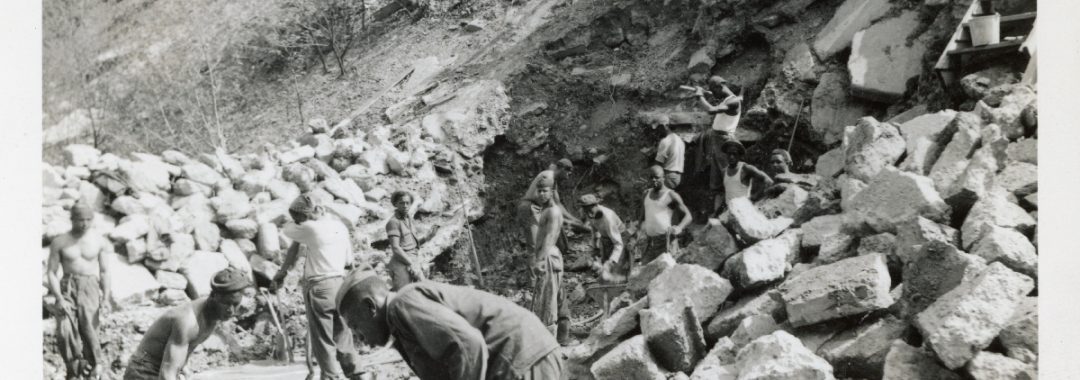
By 1935 the CCC made their way to Cincinnati, and Mt. Airy Forest became the first [and only] location in the city to benefit from this New Deal program. Group 1505-C, a segregated group of Black workers began to steadily transform the topography of Mt. Airy and the surrounding landscape. Over the next two years, 200+ men from all over the country accomplished many feats including building several shelters [which CCC members lived in during their tenure] and professional buildings onsite including comfort stations and concession stands, they established rock-wall retentions and dam construction, trail building and clearing, and tree and field planting.
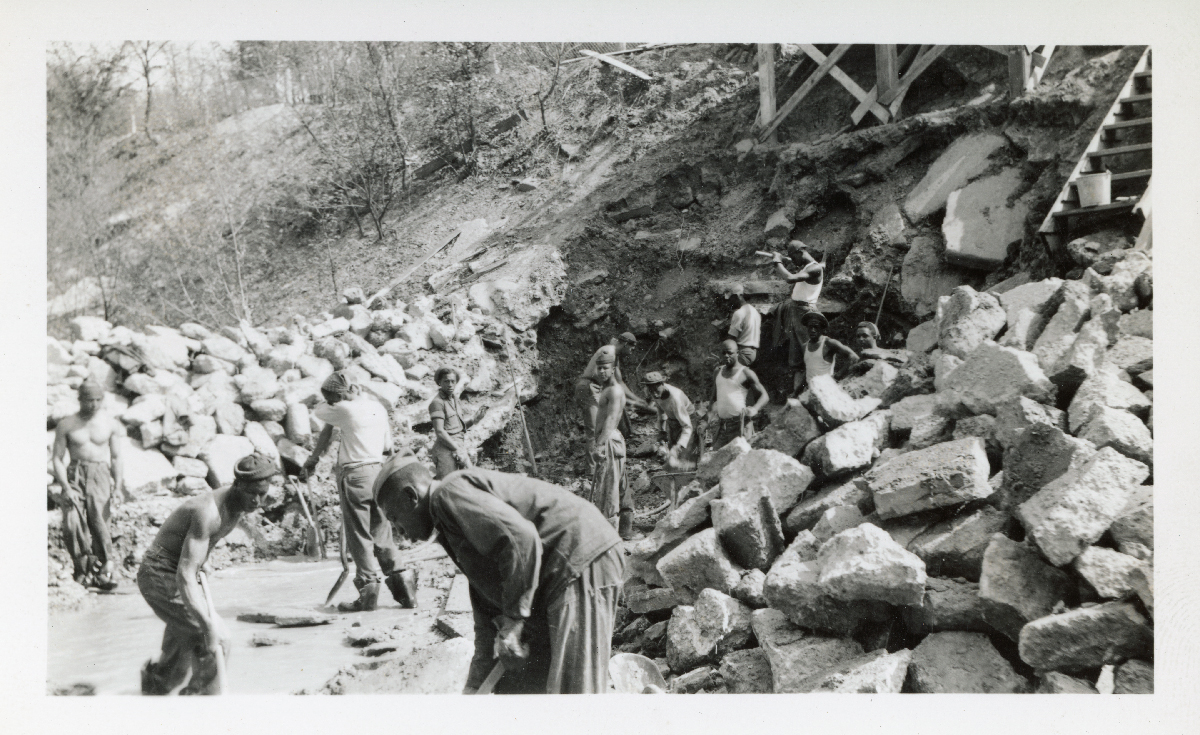
SC#141-130; CMC
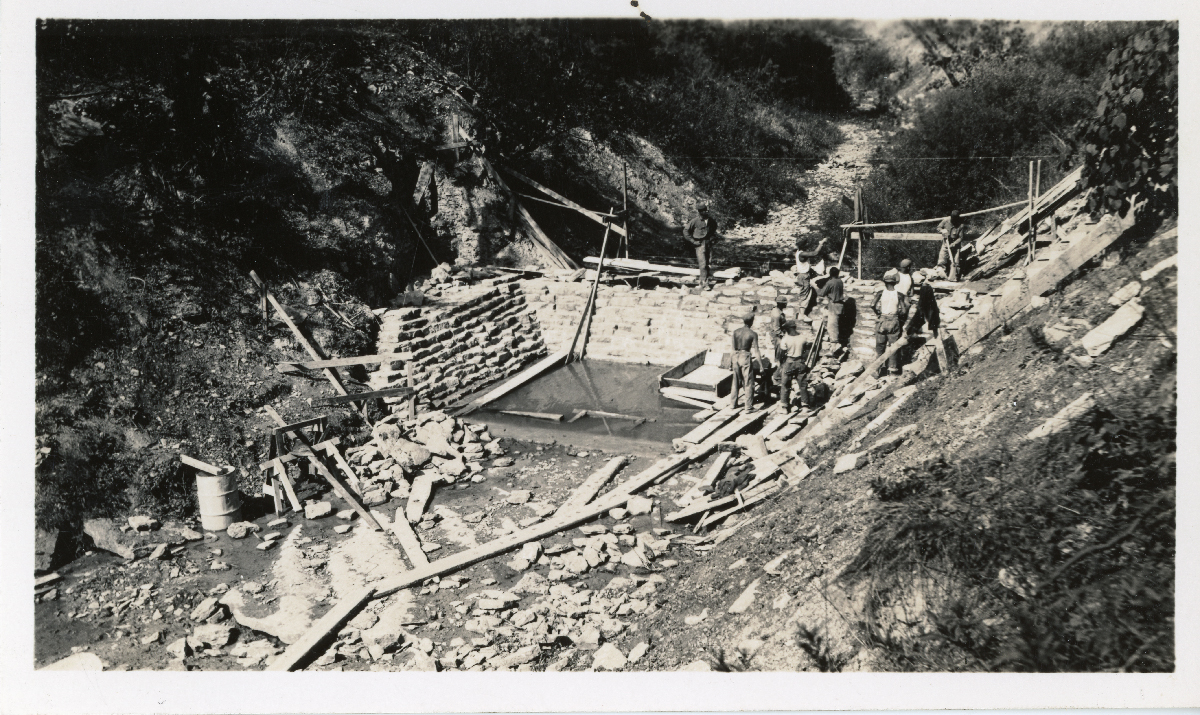
SC#141-112; CMC
Additionally, the CCC team, along with another group employed by Works Progress Administration [WPA – another New Deal employment-relief program] assisted with the 1937 Flood clean-up and rescue/recovery process. Approximately 51,414 hours of labor went into these varied projects over the 24-month period these men were in Cincinnati.
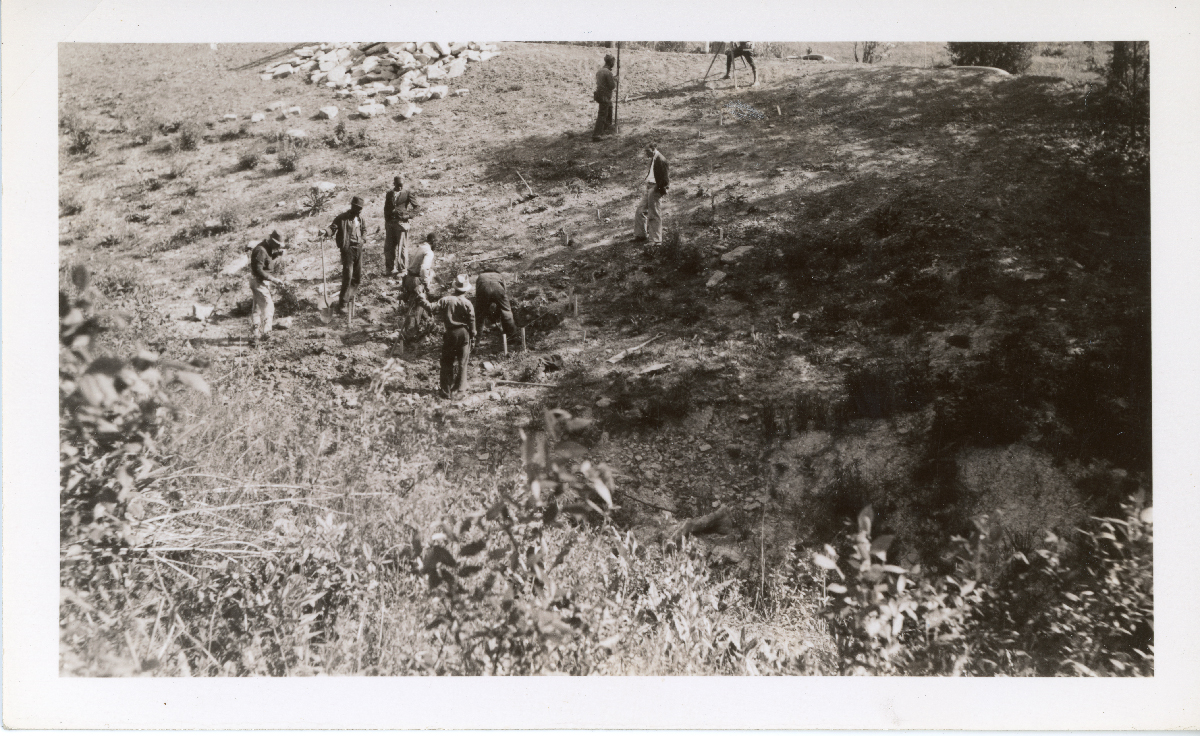
SC#141-8; CMC
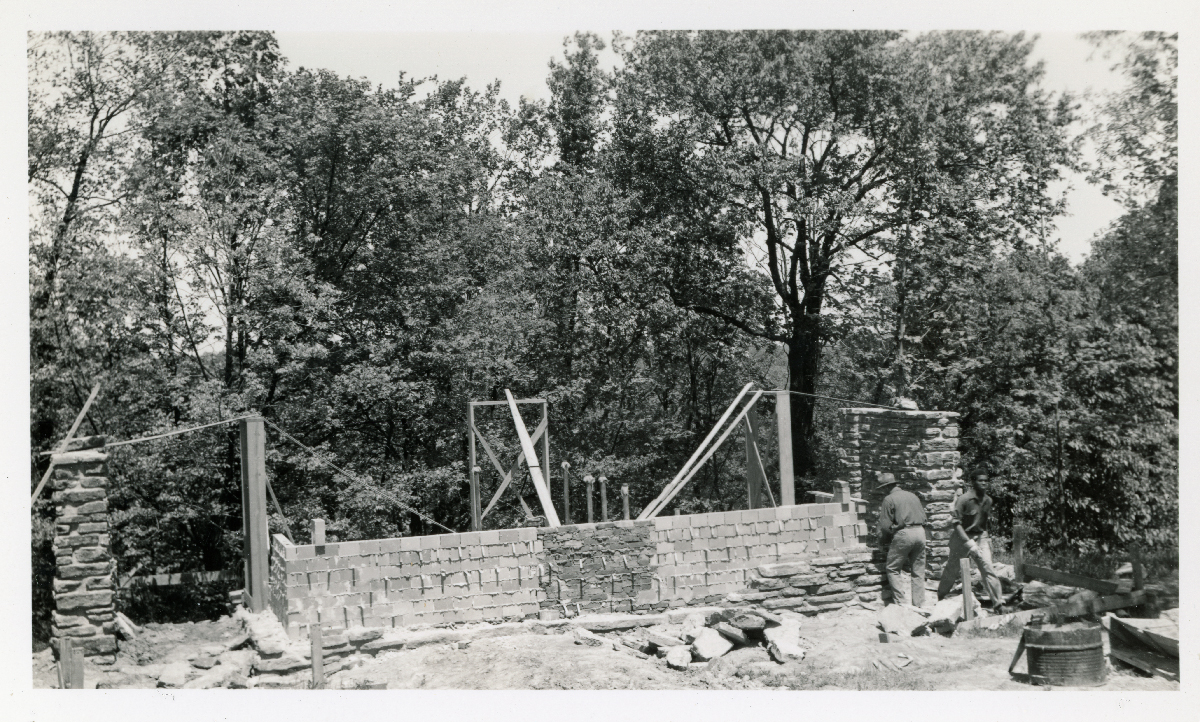
SC#141-192; CMC
During their short time, the CCC, along with members of the WPA, made significant and identifiable contributions to both Mt. Airy Forest and the greater Cincinnati area at large. Their projects, many which are still standing and visible today, are a true testament to the successes of these New Deal programs, both locally and nationally.
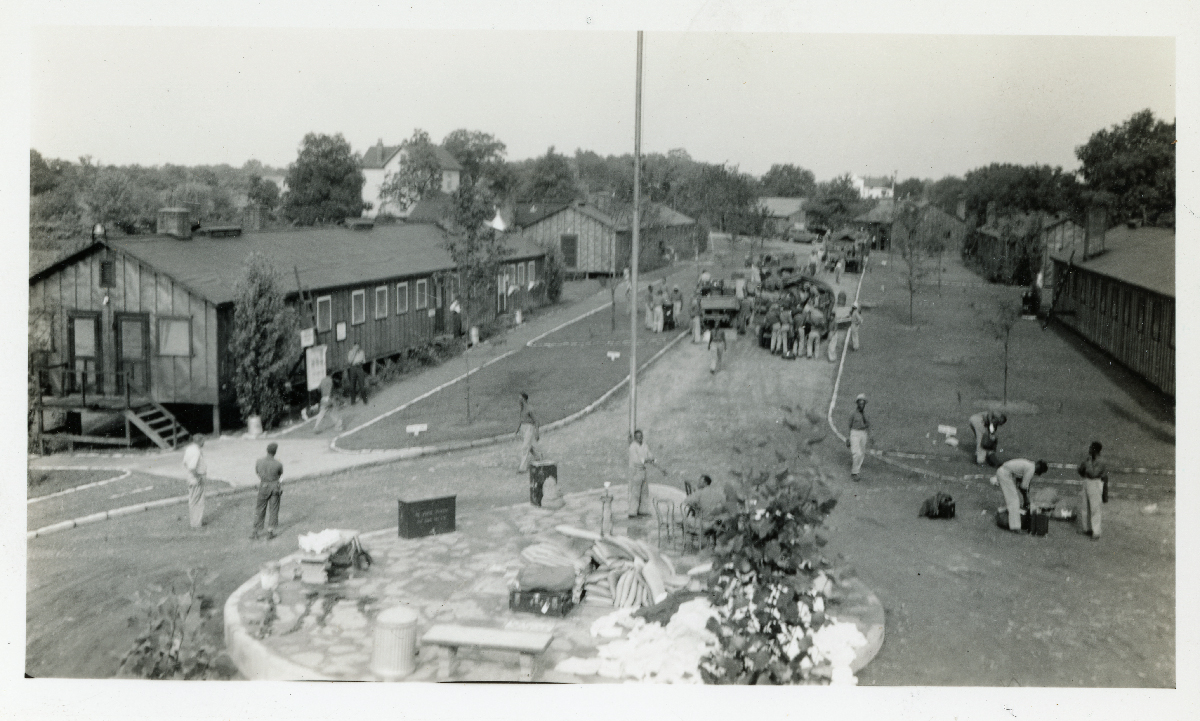
SC#141-177; CMC
The Cincinnati Museum Center is fortunate to have the visual record of this New Deal program permanently housed in our Photographs, Prints, & Media Collections. With approximately 500 negatives and prints making up SC#141 – Mt. Airy Forest and McFarlan Woods Collection [Cincinnati Conservation Corps Photographs 1935-1937] 1913-1983, this story can continue to be told and explored, 89-years after it officially ended.
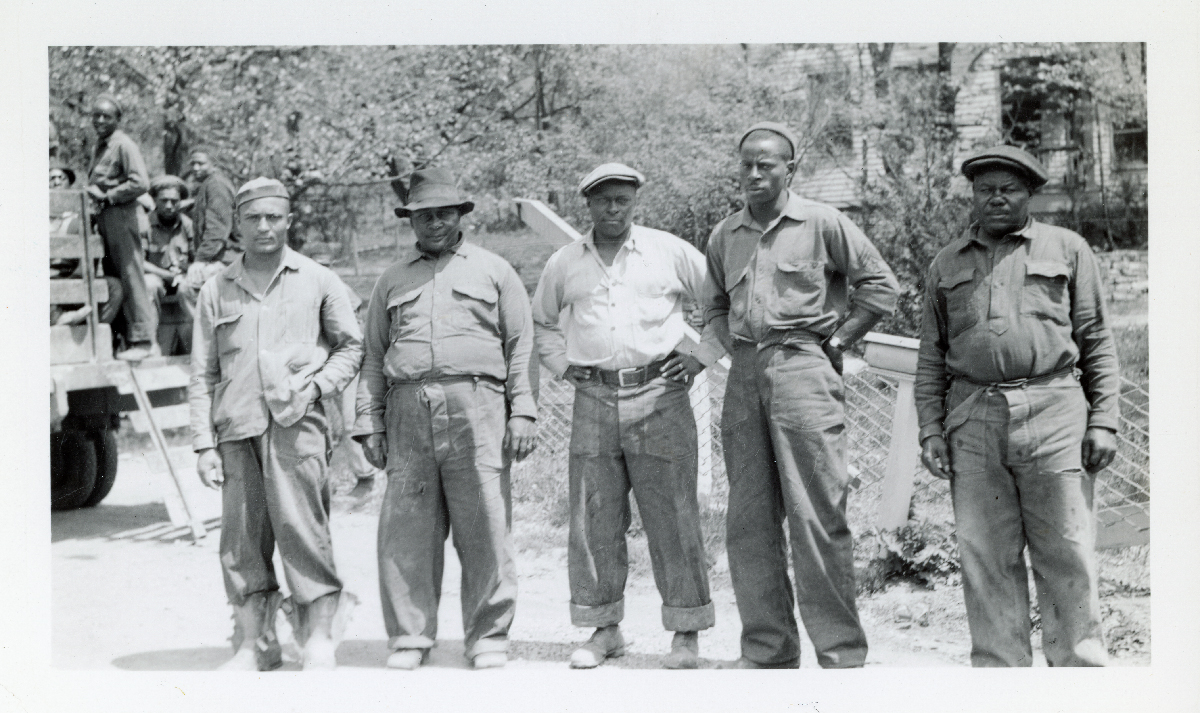
SC#141-154; CMC
Sources:
1. SC#141 – Mt. Airy Forest and McFarlan Woods Collection [Cincinnati Conservation Corps Photographs 1935-1937] 1913-1983; Gift of Mr. and Mrs. George Kase; Provided courtesy of Cincinnati Museum Center.
2. Mount Airy Forest – Cincinnati OH – Living New Deal; Website: https://livingnewdeal.org/sites/mount-airy-forest-cincinnati-oh/
3. New Deal 90 — The Civilian Conservation Corps: March 31, 1933 – Website: https://www.roosevelthouse.hunter.cuny.edu/exhibits/new-deal-90-civilian-conservation-corps-march-31-1933/
4. Into the Woods: The First Year of the Civilian Conservation Corps [Fall 2006, Vol. 38, No. 3] by Joseph M. Speakman; Website: https://www.archives.gov/publications/prologue/2006/fall/ccc.html
5. Mt. Airy Forest - The History of the African American Civilian Conservation Corps – Website: https://www.cincinnati-oh.gov/cincyparks/news/mt-airy-forest-history-african-american-civilian-conservation-corps/
6. President Franklin Delano Roosevelt and the New Deal – Website: President Franklin Delano Roosevelt and the New Deal | Great Depression and World War II, 1929 to 1945 | U.S. History Primary Source Timeline | Classroom Materials at the Library of Congress | Library of Congress