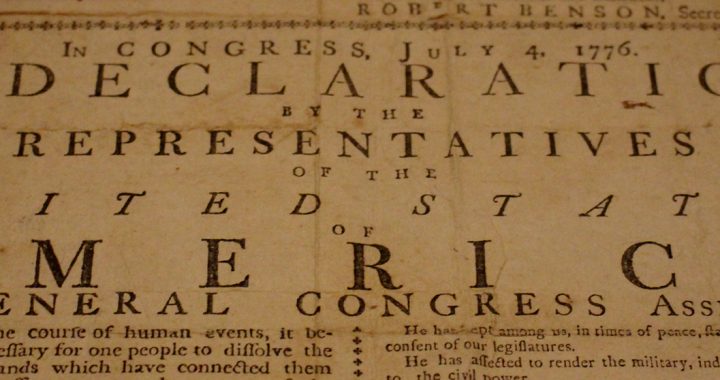
On the evening of July 4th, 1776, Philadelphia printer and engraver John Dunlap, official printer to the Continental Congress, was given an order to print broadside copies of the Declaration of Independence. It is believed that Dunlap likely printed at least 200 copies that night and perhaps more.
[READ MORE]Category Archives: Photograph and Print
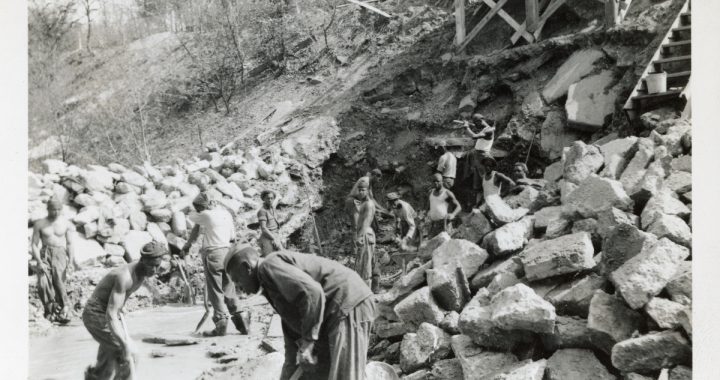
“No Discrimination Shall be Made on Account of Race, Color, and Creed:” – The Civilian Conservation Corps and Cincinnati’s Mt. Airy Forrest
The Great Depression destroyed the American economy in October 1929 leaving many jobless and unable to care themselves and their loved ones. When Franklin Roosevelt took office in early 1933, he sought inventive and productive ways to help regenerate the country.
[READ MORE]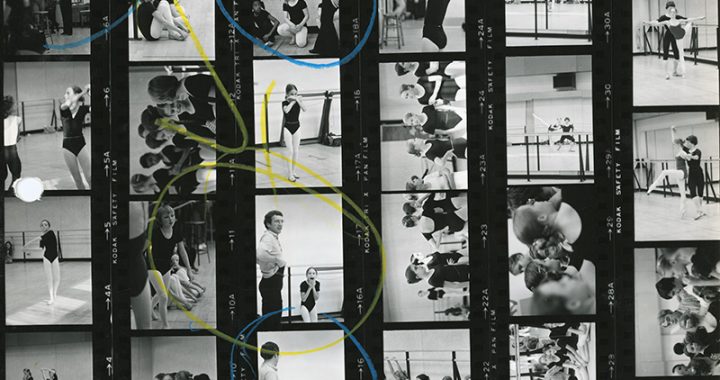
Through the Lens: Sharing the Formative Years of The Cincinnati Ballet with Photographs from Sandy Underwood
Incredible photos from The Cincinnati Ballet, now a part of CMC’s Photographs, Prints and Media archives.
[READ MORE]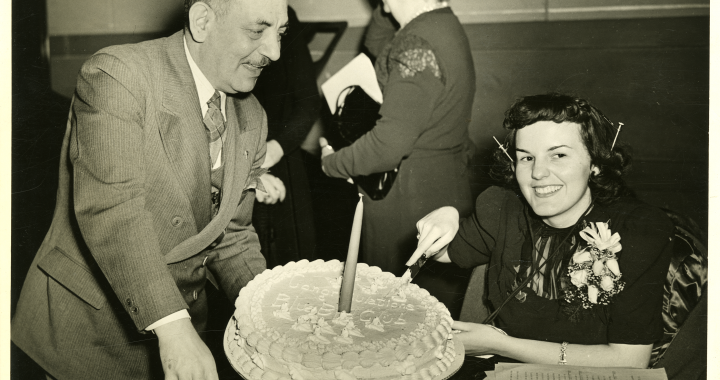
Voices of Cincinnati’s Past – Digitizing Cincinnati Museum Center’s Rare Radio Show Collection
Cincinnati Museum Center is fortunate enough to care for and permanently house a rare collection of original Cincinnati radio transcription discs from local radio stations, including the well-known WLW-WSAI Broadcasting Corporation. Keep reading to find out more about this rare piece of history!
[READ MORE]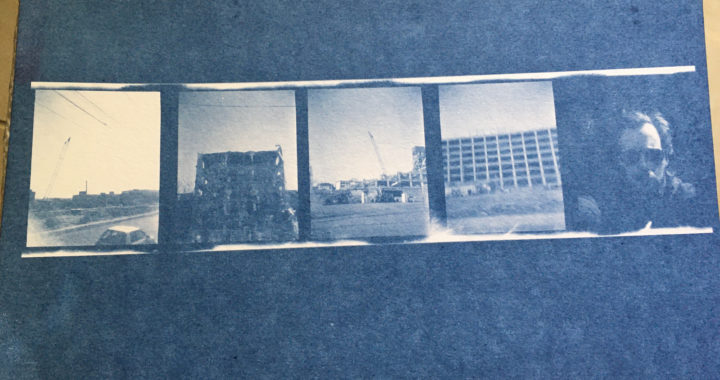
Early Photography – Cyanotypes
The Photography Department of Cincinnati Museum Center holds about 1 million photographic prints, negatives, slides, glass plate negatives, and cased images such as daguerreotypes. This article is about early photography using examples from my personal collection.
[READ MORE]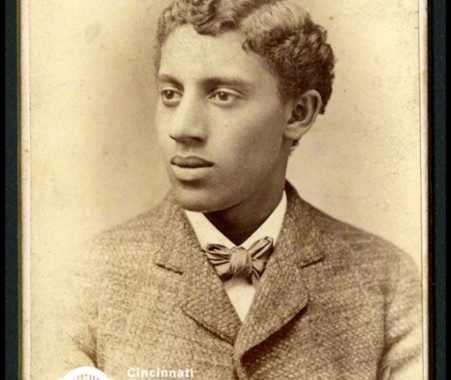
Early Photography – Part 4 of 4
The Photography Department of Cincinnati Museum Center holds about 1 million photographic prints, negatives, slides, glass plate negatives, and cased images such as daguerreotype. This article is about early photography using examples from our collection.
[READ MORE]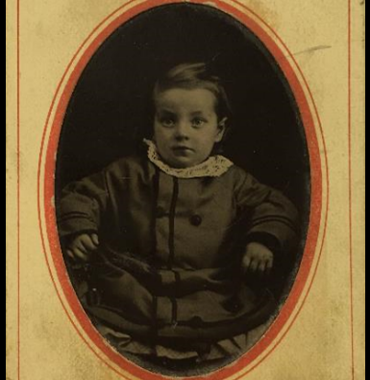
Early Photography Series 3 of 4 – Tintypes
A tintype is a wet-collodion process, same as the ambrotype, with the emulsion applied by hand, but on a dark lacquered iron plate instead of glass. The lacquer forms the dark background required to reveal the positive image. Tintypes are often coated with a protective varnish.
[READ MORE]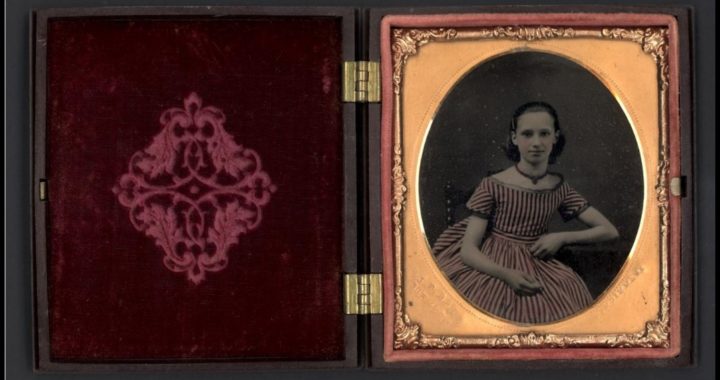
Early Photography Series 2 of 4 – Ambrotypes
The ambrotype is a direct positive image and uses the wet collodion plate process. The photographer mixes a liquid emulsion of gun cotton (combination of purified cotton with nitric and sulfuric acid), ether and alcohol.
[READ MORE]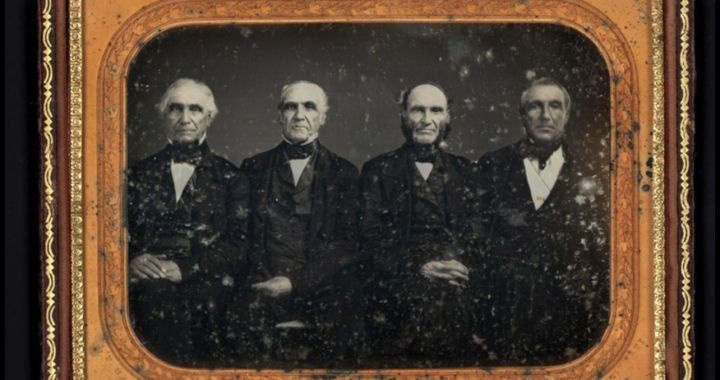
Early Photography – Part 1 of 4
The daguerreotype was invented by Louis Jacques Mandé Daguerre and was introduced to the French Academy of Sciences on January 7, 1839. A silver-plated copper plate is polished on the silver side to a mirror-like sheen and exposed to iodine vapor.
[READ MORE]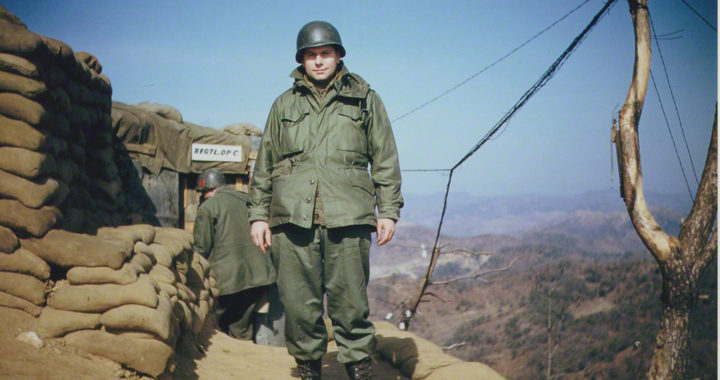
Dr. James A. Stewart, Captain, U.S. Army, Mobile Army Surgical Hospital (M.A.S.H.)
James Antenen Stewart graduated from Hamilton High School in 1941 and the University of Cincinnati in 1945. He later served as the Chief Surgeon of a Mobile Army Surgical Hospital (M.A.SH.) near Seoul.
[READ MORE]