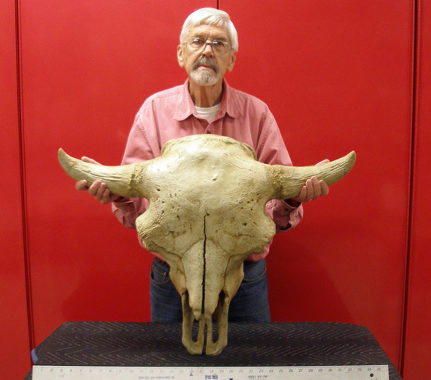
Two prehistoric bison species became known to science when their fossils were discovered in Boone County, Kentucky, home of the Cincinnati/Northern Kentucky International Airport and just down I-71/75 from Cincinnati. The Giant Bison, Bison latifrons, was identified from a skull fragment found around 1800 in the bed of a stream, likely either Gunpowder or Woolper Creek.
[READ MORE]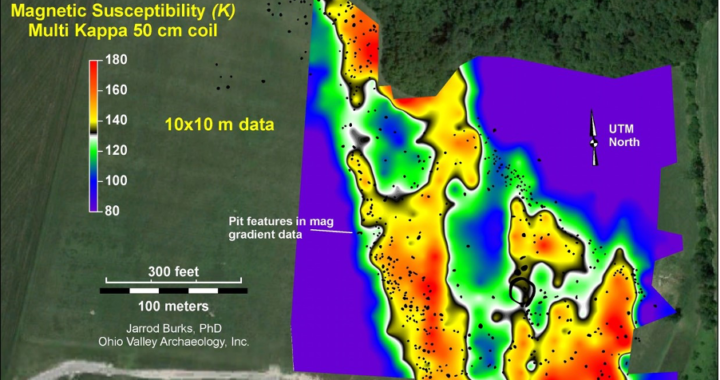
Seeing Beneath the Ground: Remote Sensing at the Hahn Site
You may wonder how Cincinnati Museum Center’s archaeologists decide where to dig when we excavate a site. In part, our decisions are based on which questions we are trying to answer (e.g. what did they eat, how did they cook, what were their houses like, etc.), and on how much we can accomplish within a short amount of time. But, to answer most of these questions, it is helpful to know with some accuracy what lies beneath the surface. For this, we turn to ground-based remote sensing, also known as archaeological geophysics.
[READ MORE]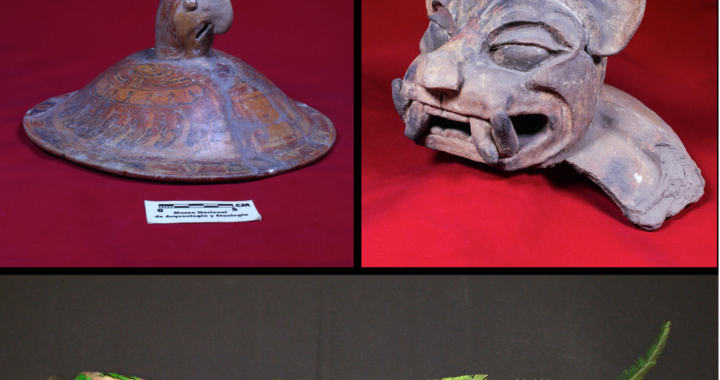
Maya Mammals (and more!)
If you visit Maya: The Exhibition, one thing you will notice is how often animals are represented in the artifacts shown, and even in the glyphs used in their ancient writing system. Historic and modern cultures all around the world often use images of animals in their art and to decorate everyday objects. These animals might be important food sources, or religious or cultural symbols, or even pets.
[READ MORE]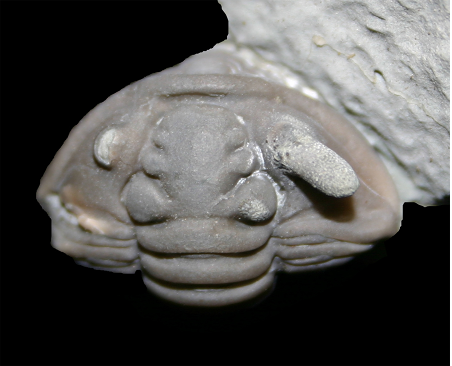
Encrustation! Species Interaction in the Fossil Record
Encrusted fossil specimens are important because they provide direct evidence of species interaction at a single point in geological time. With this information, paleontologists can reconstruct community composition, the ecological roles of various fossil organisms and the biological implications of such interactions.
[READ MORE]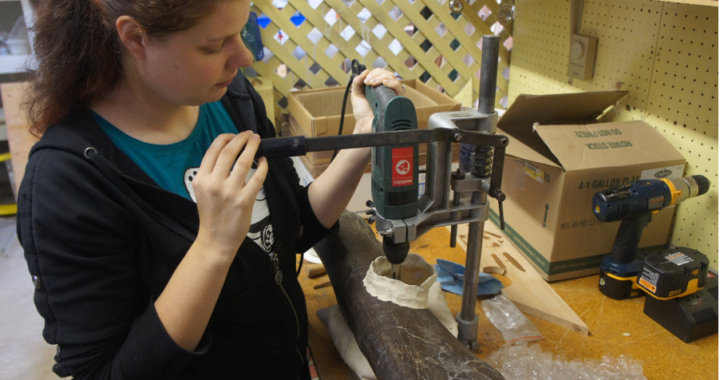
That can’t be good! (for a fossil)
Why then would anyone want to damage a fossil bone by removing a section of it with a power drill? Surely this must be a wanton act of vandalism! Read our latest blog entry to learn why museums sometimes have to break a few eggs to make an omelet and drill a few bones to make a discovery.
[READ MORE]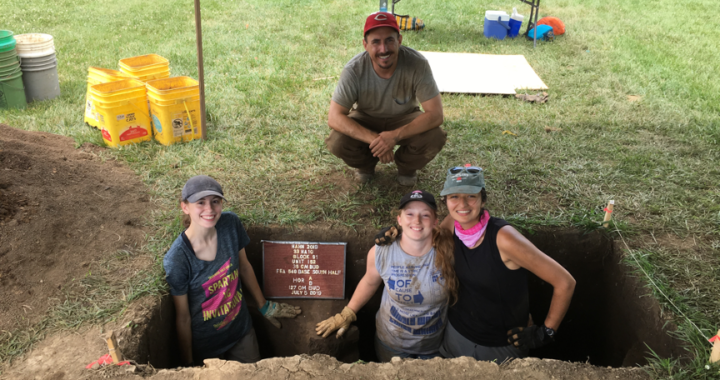
The “Dirty” Dozen
The Hahn site, one of the largest and most intensively occupied Fort Ancient-age sites in the Ohio Valley, was occupied at least intermittently from the 13th through the 17th centuries. Our excavations have uncovered lots in those 12 years. And, even though we still have several more years of processing and analysis ahead of us, let’s take a quick look at what we have accomplished.
[READ MORE]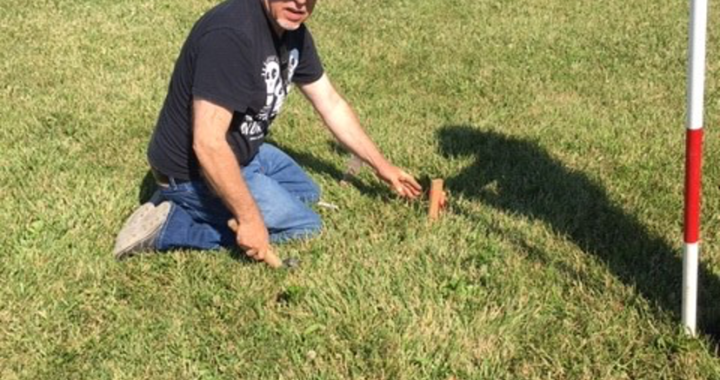
X Marks the Spot: Knowing Where we are in Archaeology Field Work
Do you always know where you are? Well, when we are digging in the field, I can usually tell you to within a centimeter or two. Why is this important? It is because the “control” of space allows us to more adequately reconstruct what is going on at a site.
[READ MORE]
The (Ancient) World Comes to Cincy!
These are strange times, indeed, what with much of the world on lockdown due to pandemic. However, time and events march on and there is perhaps cause to be optimistic for better times returning in the fall.
[READ MORE]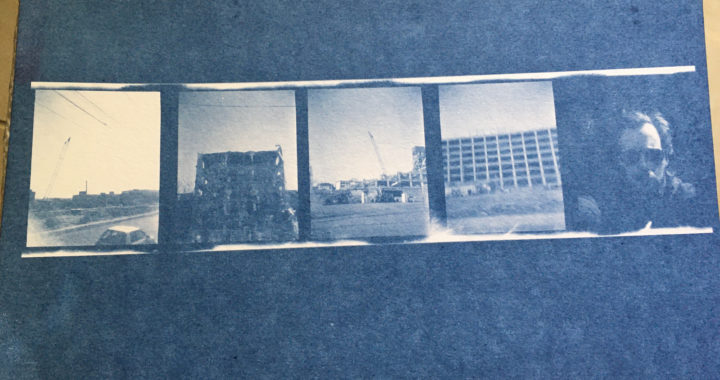
Early Photography – Cyanotypes
The Photography Department of Cincinnati Museum Center holds about 1 million photographic prints, negatives, slides, glass plate negatives, and cased images such as daguerreotypes. This article is about early photography using examples from my personal collection.
[READ MORE]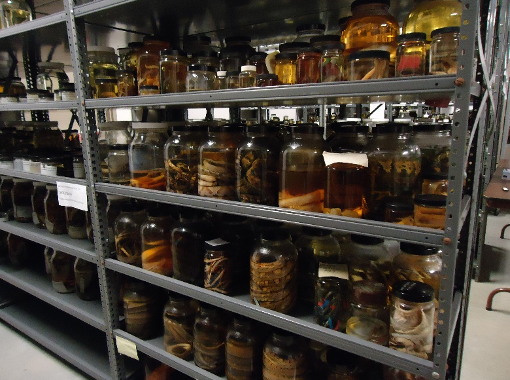
What’s in the jar?
The Zoology collections at Cincinnati Museum Center are divided into “fluid” and “dry” collections. The fluid collection space is one of my favorites at the museum – it is equal parts creepy and fascinating for most visitors. In the dry collections, specimens are typically skinned (removing all the organs and soft tissue), stuffed, and dried.
[READ MORE]